
Weekly Report
Week 40 2014
Article source: Date time:2014-10-21
Download:0.pdf
Chinese Influenza Weekly Report
(All data are preliminary and may change as more reports are received)
|
Summary l During week 40, 2014, ILI% rose because of a long holiday for National Day. The influenza A(H3N2) viruses and B influenza were predominantly reported in south China, with a small amount of influenza A(H3N2) viruses and A(H1N1)pdm09 identified in north China. l Among influenza viruses antigenically characterized by CNIC since April, 2014, 117(100%) influenza A(H1N1)pdm09 viruses were characterized as A/California/7/2009-like; 718(99.6%)influenza A(H3N2) viruses were characterized as A/Victoria/361/2011(H3N2)-like; 291(91.5%)influenza B/Yamagata viruses were characterized as B/Massachusetts/2/2012-like. 14 (45.2%)influenza B/Victoria viruses were characterized as B/Brisbane/60/2008-like. l Among the influenza viruses tested by CNIC for antiviral resistance analysis since April, 2014, all influenza A(H1N1)pdm09 and all influenza A(H3N2) viruses were resistant to adamantine; all but 1 influenza B viruses were sensitive to neuraminidase inhibitors, all influenza A(H1N1)pdm09 and all influenza A(H3N2) viruses were sensitive to neuraminidase inhibitors. |
Outbreak Surveillance
During week 40 (Sep29–Oct5, 2014), two ILI outbreaks were reported nationwide. One of them was B outbreaks, and etiology of 1 outbreak was not determined yet.
Surveillance of outpatient or emergency visits for Influenza-like Illness (ILI)
During week 40, the percentage of outpatient or emergency visits for ILI (ILI%) at national sentinel hospitals in south China was 3.0%, higher than the last week(2.7%), higher than the same week of 2010-2013 (2.6-2.9%) (Figure 1).
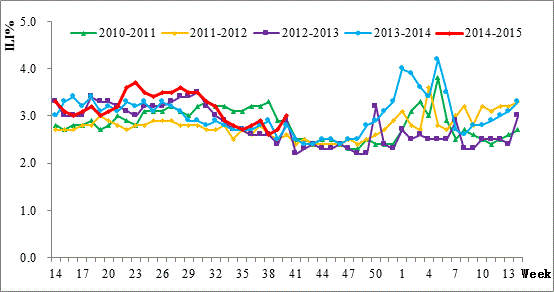
Figure 1. Percentage of Visits for ILI at Sentinel Hospitalsin South China (2010-2015)
During week 40, ILI% at national sentinel hospitals in north China was 2.8%, higher than the last week(2.4%), higher than the same week of 2010 and 2011 (2.7% and 2.6%), lower than the same week of 2012 and 2013 (3.5% and 3.2%) (Figure 2).
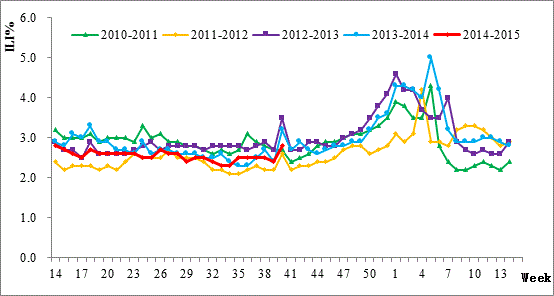
Figure 2. Percentage of Visits for ILI at Sentinel Hospitals in North China (2010-2015)
Virologic Surveillance
During week 40, influenza network laboratories tested 2862 specimens, of which 127 (4.4%) were positive for influenza, influenza A and influenza B virus were 97 (76.4%) and 30 (23.6%),respectively(Table 1). During week 40, the percentage of specimens that were tested positive for influenza in south China was 4.6%, which was lower than the previous week (6.3%) (Figure 3). During week 40, the percentage of specimens that were tested positive for influenza in north China was4.2%, which was higher than the previous week (2.6%) (Figure 4).
Table 1 Laboratory Detections of ILI Specimens (Week 40, 2014)
|
|
Week 40 |
||
|
South China |
North China |
Total |
|
|
No. of specimens tested |
1909 |
953 |
2862 |
|
No. of positive specimens (%) |
87(4.6%) |
40(4.2%) |
127(4.4%) |
|
Influenza A |
57(65.5%) |
40(100%) |
97(76.4%) |
|
A(H3N2) |
57(100%) |
37(92.5%) |
94(96.9%) |
|
A(H1N1)pdm09 |
0(0) |
2(5.0%) |
2(2.1%) |
|
A (subtype not determined) |
0(0) |
1(2.5%) |
1(1%) |
|
Influenza B |
30(34.5%) |
0(0) |
30(23.6%) |
|
B (lineage not determined) |
14(46.7%) |
0(0) |
14(46.7%) |
|
Yamagata |
16(53.3%) |
0(0) |
16(53.3%) |
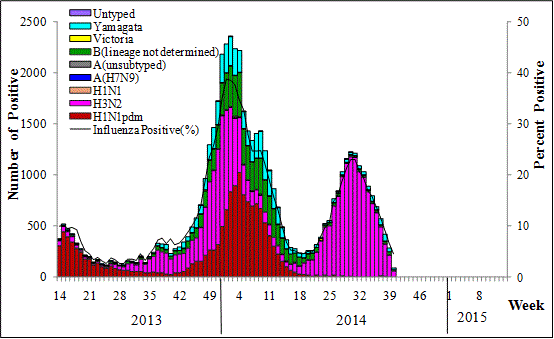
Figure 3. Influenza Positive Tests Reported by Southern Network Laboratories (Week 14, 2013–Week 40, 2014)
Note: Analysis in this part was based on the test results of network laboratories. If it were not consistent with the results of CNIC confirmation, the results of CNIC confirmation were used.
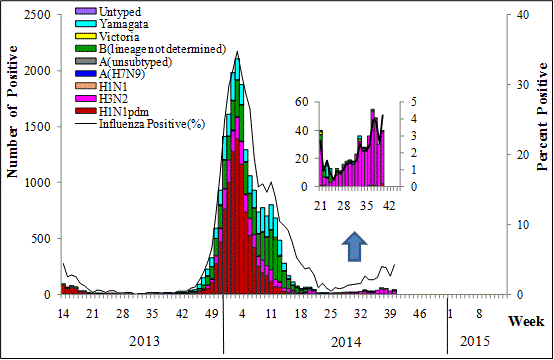
Figure 4. Influenza Positive Tests Reported by Northern Network Laboratories (Week 14, 2013–Week 40, 2014)
Note: Analysis in this part was based on the result of network laboratories. If it were not consistent with the results of CNIC confirmation, the results of CNIC confirmation were used.
Antigenic Characterization
Since April 1st, 2014, 117(100%) of the 117 A(H1N1)pdm09 viruses tested were characterized as A/California/7/2009-like; 718(99.6%) of the 721 H3N2 influenza viruses tested were characterized as A/Victoria/361/2011-like; 291(91.5%) of the 318 influenza B/Yamagata lineage viruses tested were characterized as B/Massachusetts/2/2012-like; 14(45.2%) of the31 influenza B/Victoria lineage viruses tested have been characterized as B/Brisbane/60/2008-like.
Antiviral Resistance
Since April 1st, 2014, among the influenza viruses tested by CNIC for antiviral resistance, all influenza A(H1N1)pdm09 and all influenza A(H3N2) viruses were resistant to adamantine ; all but 1 influenza B viruses were sensitive to neuraminidase inhibitors, all influenza A(H1N1)pdm09 and all influenza A(H3N2) viruses were sensitive to neuraminidase inhibitors.
